
Federated learning platform that just works

Train & eval models on private data across organizations. We handle the infra, orchestration, parallelization, scaling, acceleration, ops, maintenance… and the rest — you focus on the model.

FL Applications

Explore real-world FL use cases across healthcare, finance, automotive, and more. See how they work, try them hands-on, and apply them to your own organization when you're ready.

Try a template
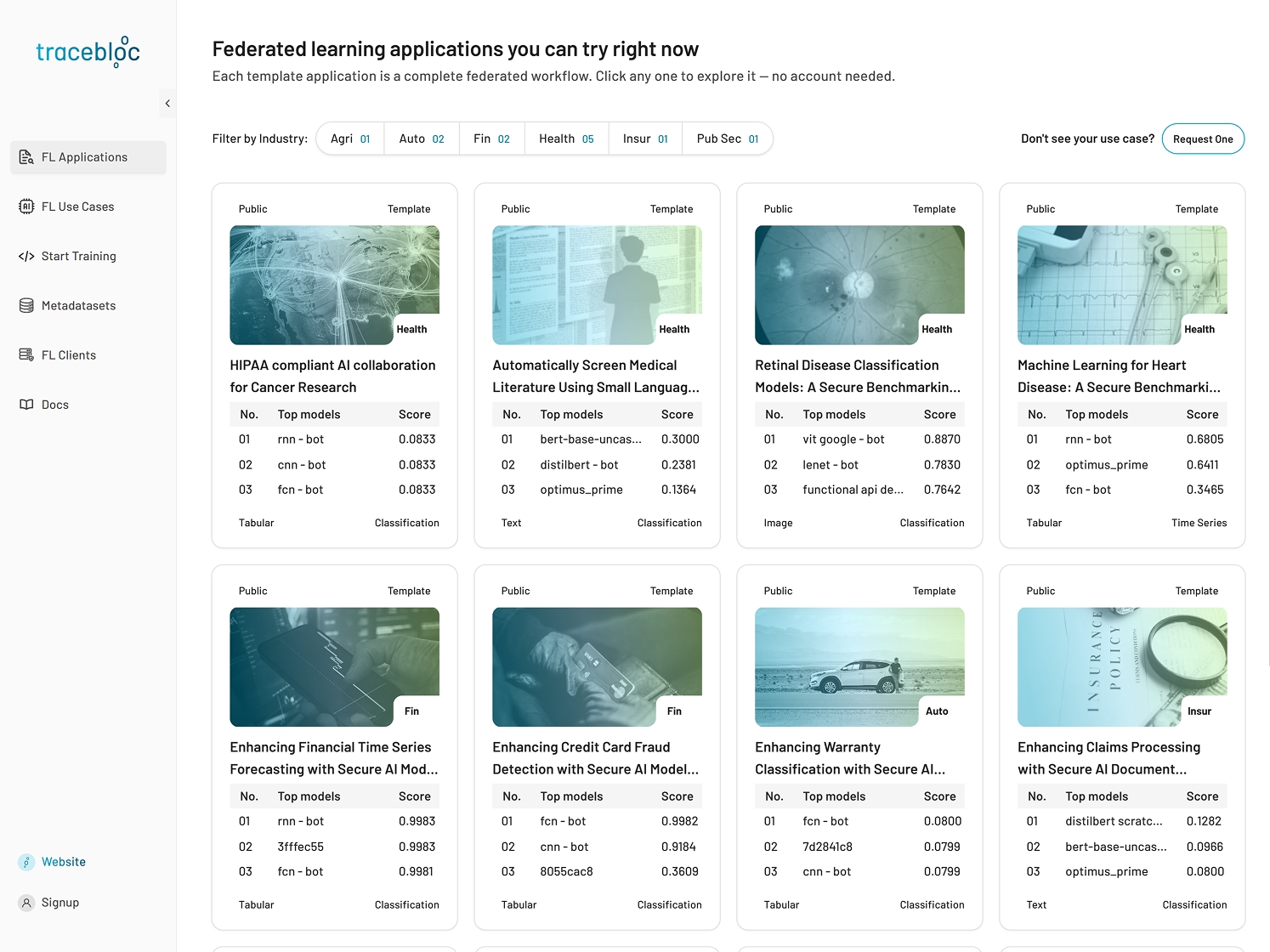
FL Applications

FL Use Cases

Your space to collaborate on private data. Create a use case, invite partners, define your data and benchmarks, and work together on AI — without sharing a single raw record.
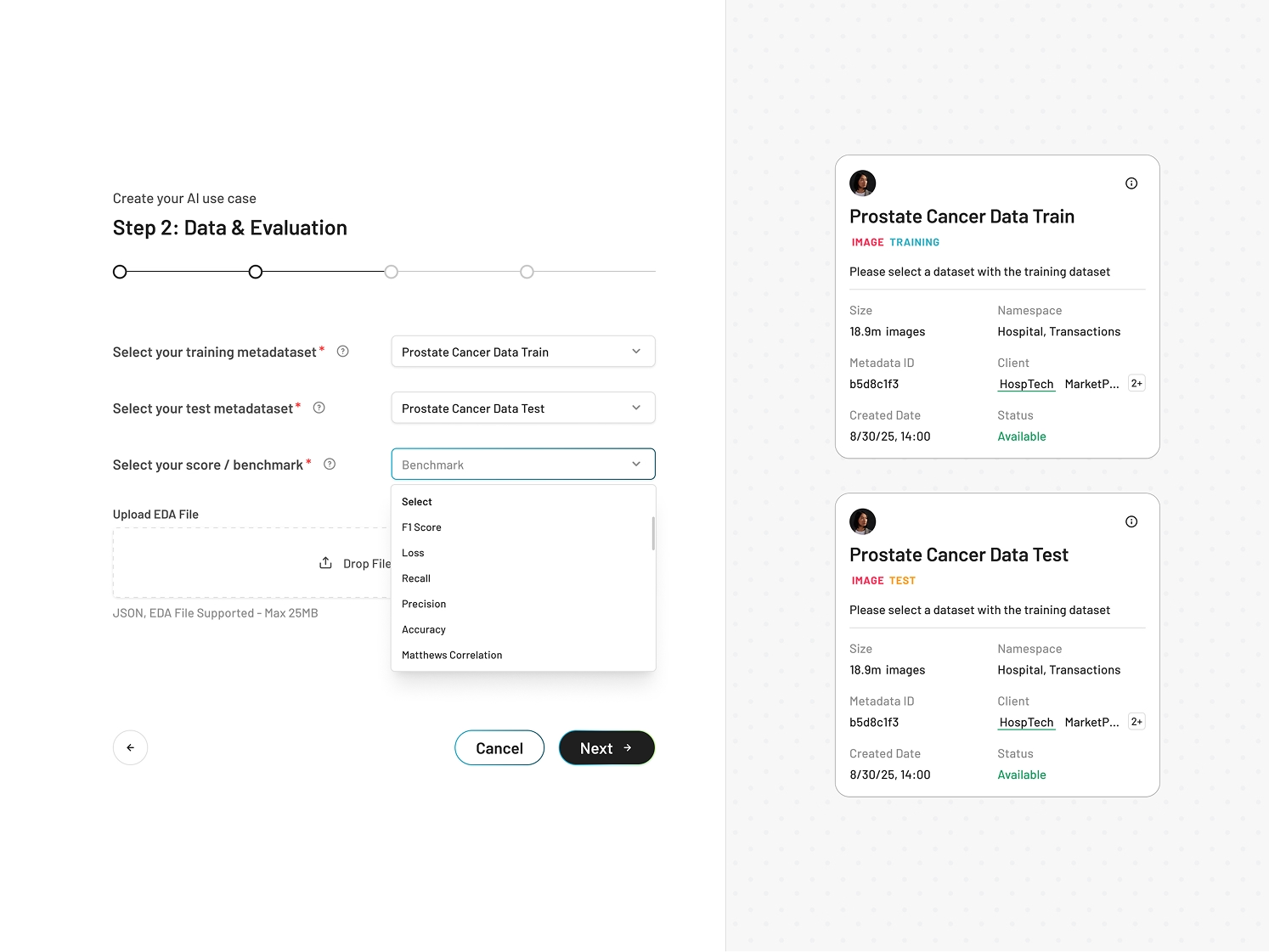
FL Use Cases

Training

Start training from any notebook. Connect to tracebloc, upload your model, and launch federated training in a few lines of code. Works with the frameworks you already use.
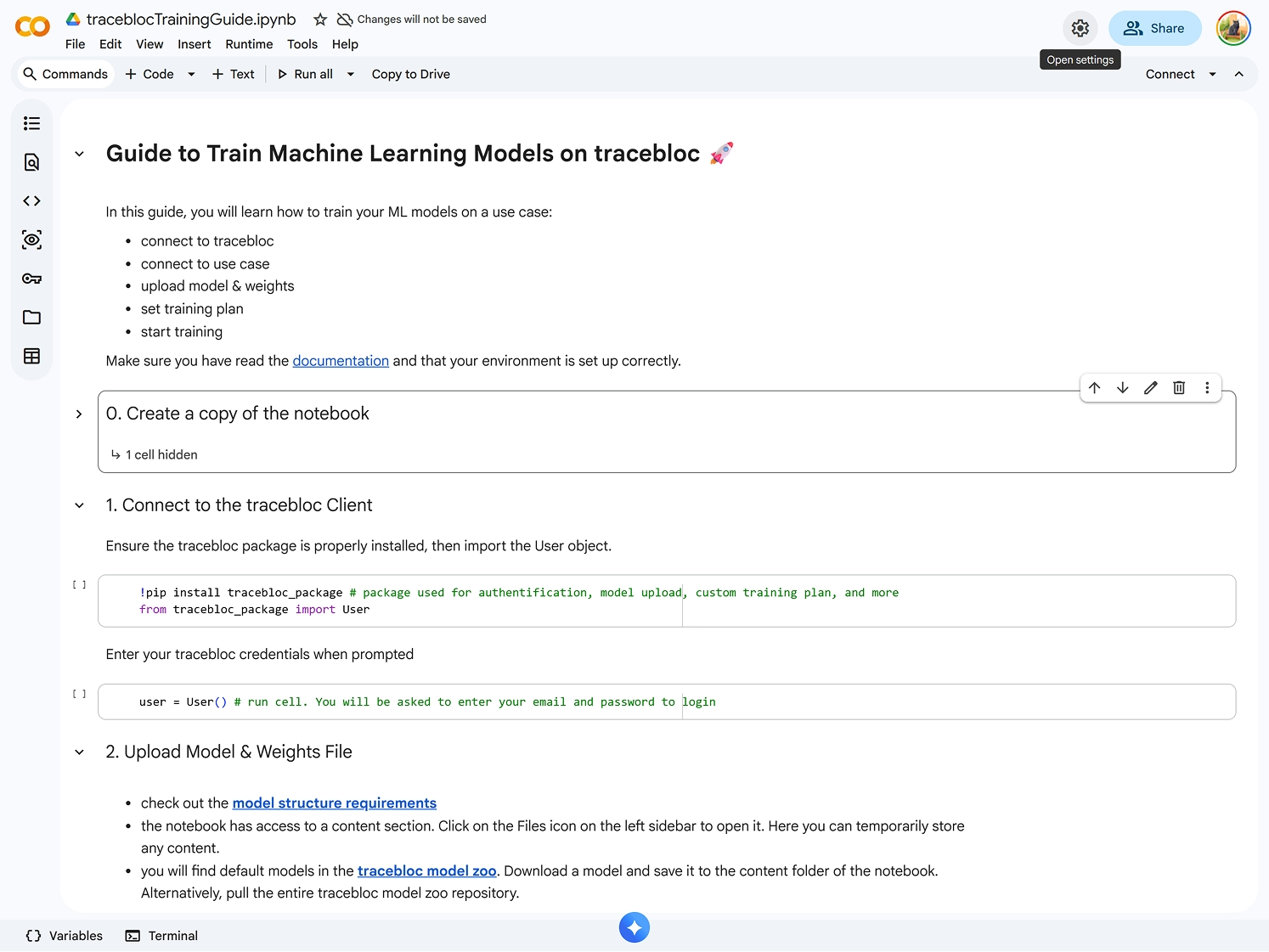
Training

Metadataset

All your connected datasets in one place. Reuse them across any FL use case. Only metadata lives here — the real data never leaves your infrastructure.
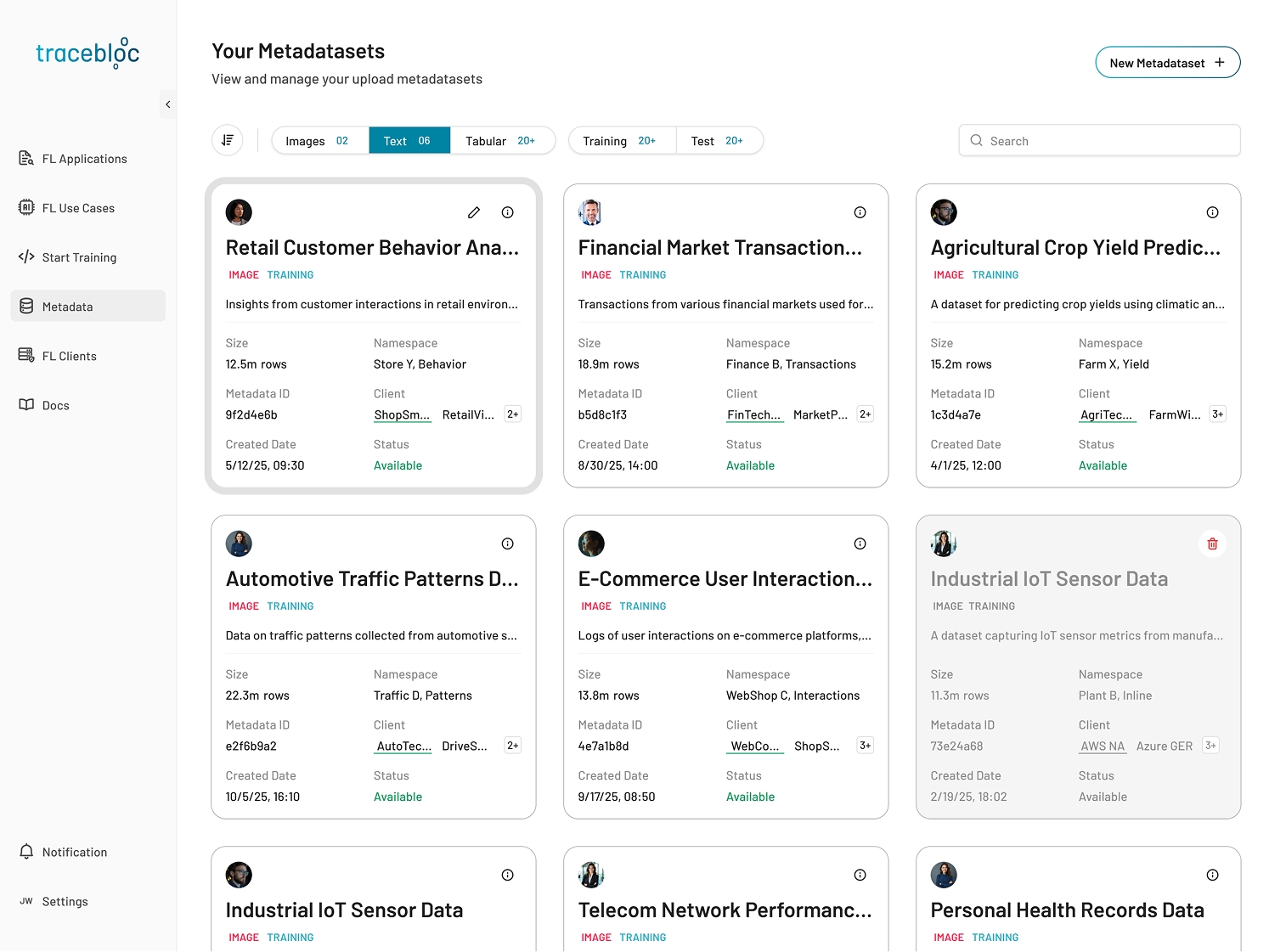
Metadataset

FL Clients

Monitor your registered clients — health, active trainings, and performance — all from one dashboard.
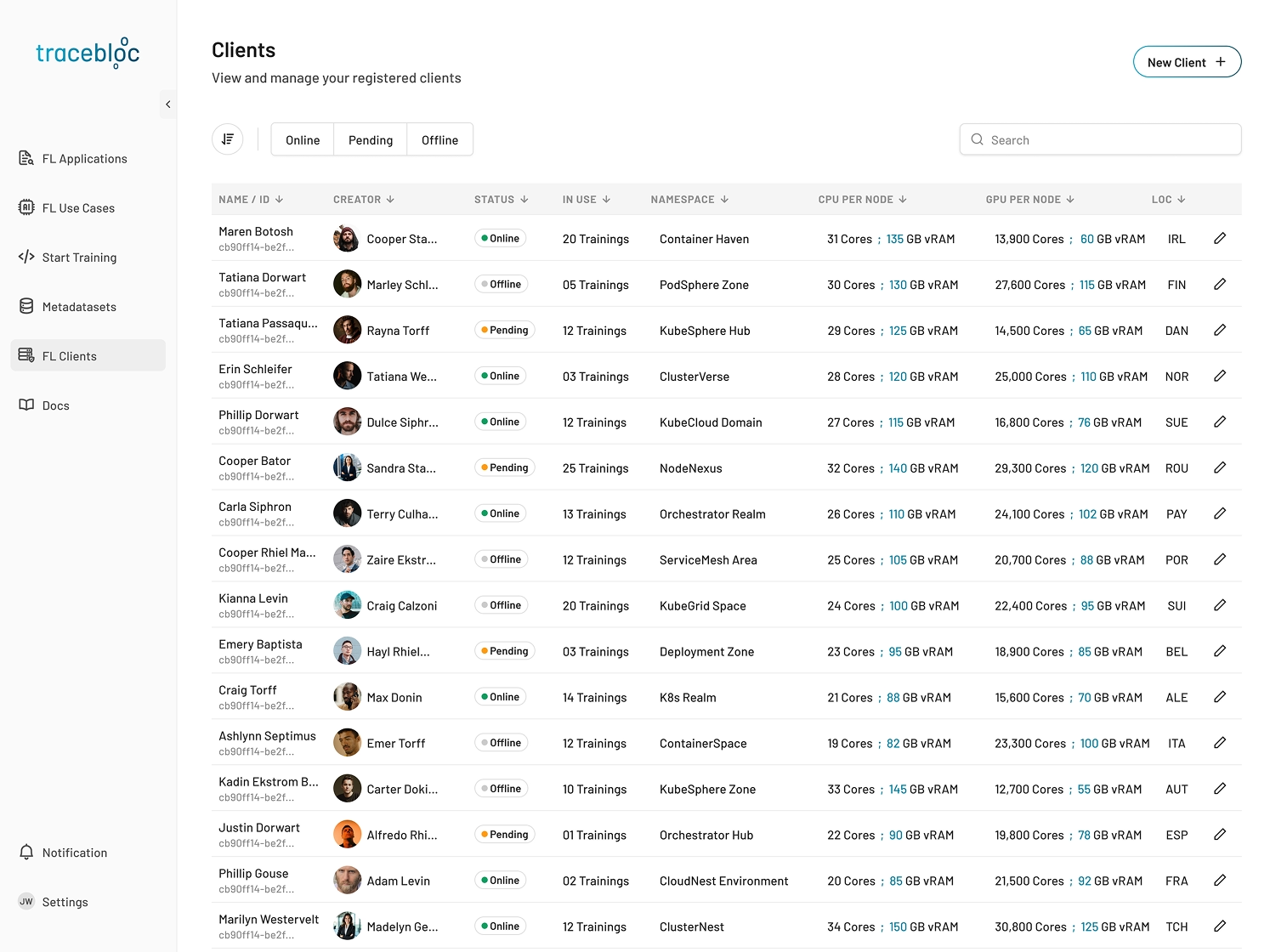
FL Clients

Docs

Everything you need to get running. Step-by-step guides for Kubernetes deployment, client setup, model upload, training configuration, and more — so you spend less time reading docs and more time training.

Read Docs
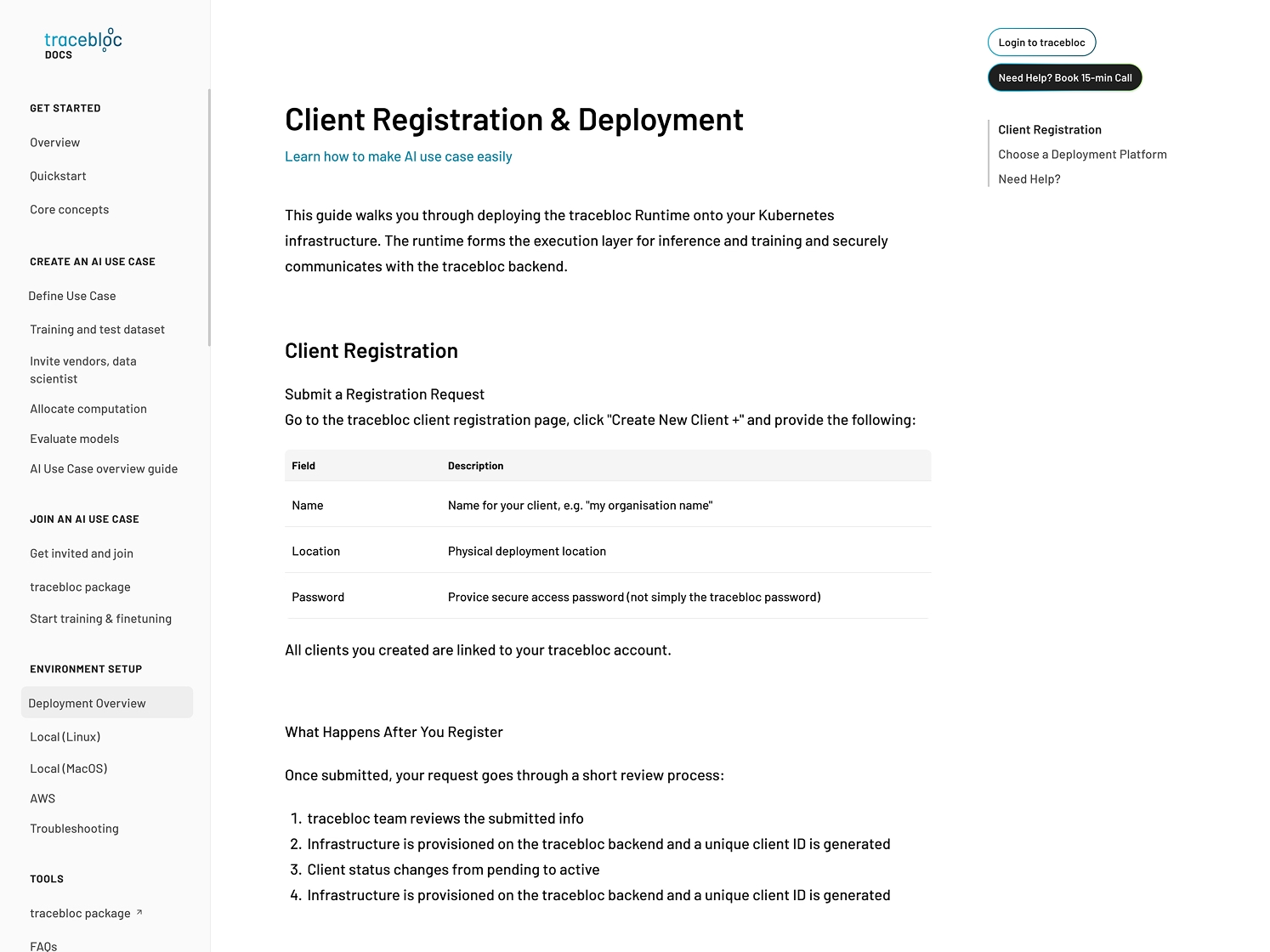
Docs

FAQs

Answers to common questions

What is tracebloc and how does it differ from other federated learning (FL) platforms?

tracebloc is a commercial federated learning platform built to train and evaluate AI models on private data across distributed systems. tracebloc handles the infrastructure, orchestration, and scaling so your team can focus entirely on the model.

Which industries and use cases is tracebloc built for?

tracebloc is designed for any organization with sensitive, siloed data, like healthcare providers, manufacturing companies, financial institutions, insurance organizations, and beyond. This is especially relevant if your training data lives across edge devices, data centers, or partner organizations and cannot be centralized.

How does federated learning actually work on tracebloc?

Each participating client trains locally on its own data source — the raw data never leaves their infrastructure. Only model updates are shared back to a centralized server for aggregation. tracebloc manages the full training process: client registration, orchestration across distributed systems, parallelization, and performance monitoring — all from one platform. It's a federated learning framework designed so that organizations can collaboratively train models on decentralized data without ever exposing sensitive information.

How is tracebloc different from building on open-source frameworks?

Open-source frameworks give you the building blocks — tracebloc gives you a production-ready federated learning platform. That means no managing Kubernetes clusters from scratch, no custom ops work, no rebuilding orchestration logic. For teams that need high performance federated AI learning without the infrastructure overhead, tracebloc is the commercial alternative purpose-built for cross-organisational collaboration.

Where does my data actually live?

Your training data never leaves your infrastructure. Only metadata is visible within tracebloc's Metadataset view, so you can manage and reuse datasets without exposing a single raw record. This architecture is designed for regulatory compliance and data privacy.

Can multiple organizations collaborate on the same use case?

Yes. My FL Use Cases gives a private space to invite partners, define datasets and benchmarks, and collaboratively train models on decentralized data. It's how top platforms for federated learning across organizations enable real collaboration at scale.

What makes tracebloc a strong choice compared to cloud platforms with federated AI learning support?

Most cloud platforms that support federated learning offer it as a feature layered onto a broader cloud infrastructure product. This means that you're often responsible for wiring together the orchestration, handling client registration, managing training processes, and building your own monitoring.

We designed tracebloc as a commercial federated learning platform. We built every part of the product for cross-organisational, privacy-preserving AI model development on decentralized data.

Which AI platforms support federated learning across distributed systems in 2026?

The landscape of AI platforms for federated learning across distributed systems has matured significantly. However, there's still a gap between platforms that offer federated learning as an add-on and those having it as a core capability.

tracebloc sits firmly in the second category. As one of the leading commercial federated learning platforms companies in 2026, it's built to train AI models across distributed systems. Hospitals, financial institutions, automotive fleets, or research institutes can seamlessly evaluate and train models without centralizing private data.

How do AI platforms handle federated learning across distributed systems differently?

Not all AI platforms for federated learning are the same. Some require you to manage your own orchestration layer, handle client registration manually, or run training processes.

tracebloc takes a different approach. The platform abstracts away the complexity of distributed systems entirely. Your team interacts with a clean training API and a unified dashboard rather than a tangle of infrastructure configurations. For organizations comparing which AI platforms support federated learning across distributed systems, that difference drives the decision.

What should organizations look for when evaluating commercial federated learning platforms companies in 2026?

When assessing commercial federated learning platforms companies in 2026, the most important factors go beyond whether a platform supports the FL protocol at all. You want to evaluate how well the platform handles heterogeneous decentralized data across clients, how much engineering overhead is required to get a training run live, what monitoring and observability tooling is included, and whether the platform is built to scale across many organizations simultaneously.

tracebloc addresses all of these requirements. It's designed for production federated learning at scale, not just proof-of-concept experiments on controlled data.

How does tracebloc compare to other AI platforms for federated learning across distributed systems?

Most AI platforms approach distributed systems as a general infrastructure problem and apply federated learning on top. Every feature in tracebloc is built for collaborative AI training across private, distributed data.

The result is a platform that feels native to federated learning rather than adapted to it. For teams that hit walls when running federated learning on general AI platforms, tracebloc solves those problems.

Are there commercial federated learning platforms companies in 2026 that support both cloud and on-premise deployments?

Yes, and deployment flexibility is increasingly a hard requirement for organizations operating under strict data sovereignty or regulatory compliance constraints.

tracebloc supports Kubernetes-based deployment. This means it can run on your own infrastructure, in a private cloud, or in a hybrid configuration depending on your organization's needs. Each client trains locally within its own environment, and only model updates are communicated back through the platform. This architecture makes tracebloc compatible with the most restrictive data governance environments across healthcare, finance, and government.

Why are more organizations moving toward dedicated AI platforms for federated learning rather than building on open-source frameworks?

Building a production-grade federated learning framework on open-source tools requires solving a long list of hard engineering problems — client orchestration, fault tolerance, secure aggregation, training process management, parallelization, scaling, and ongoing maintenance. For most organizations, that engineering investment pulls resources away from what actually creates value: the model itself.

Commercial federated learning platforms companies in 2026 like tracebloc exist precisely to eliminate that overhead. The platform handles the full distributed systems layer so data science and ML teams can spend their time on neural network architecture, fine-tuning, and evaluation rather than infrastructure.

What role does tracebloc play in the broader ecosystem of AI platforms supporting federated learning?

tracebloc occupies a specific and important position in the federated learning ecosystem. It's the layer that makes cross-organisational AI-driven collaboration practical at scale. Open-source communities advance the theory and tooling around federated learning.

In the meantime, tracebloc translates those advances into a platform that works in production environments. It works with real private data, regulatory constraints, and partners who need to collaboratively train on decentralized data.

For any organization seriously evaluating AI platforms for federated learning across distributed systems, tracebloc represents the most complete commercial solution available in 2026.

Which platforms enable federated learning for multi-hospital clinical data?

Multi-hospital clinical data is one of the most demanding environments for federated learning. Patient data is heavily regulated under frameworks like HIPAA and GDPR. Most AI platforms supporting federated learning weren't designed with clinical environments in mind. They leave hospitals responsible for their own data governance controls and regulatory compliance verification.

With tracebloc, each hospital trains locally on its own patient data and shares only model updates. The platform provides the operational maturity and privacy-by-design architecture to health AI companies evaluating federated learning platforms for multi-hospital clinical data.

How does tracebloc support research institutes and academic collaborations?

Research institutes work with partners holding private datasets. tracebloc allows academic and research teams to run rigorous, reproducible federated training experiments across distributed systems without needing a dedicated MLOps team. The platform's FL Applications library also provides reference implementations across domains that research teams can adapt and build on.